Replacement Cost for Personal Property: What You Need to Know

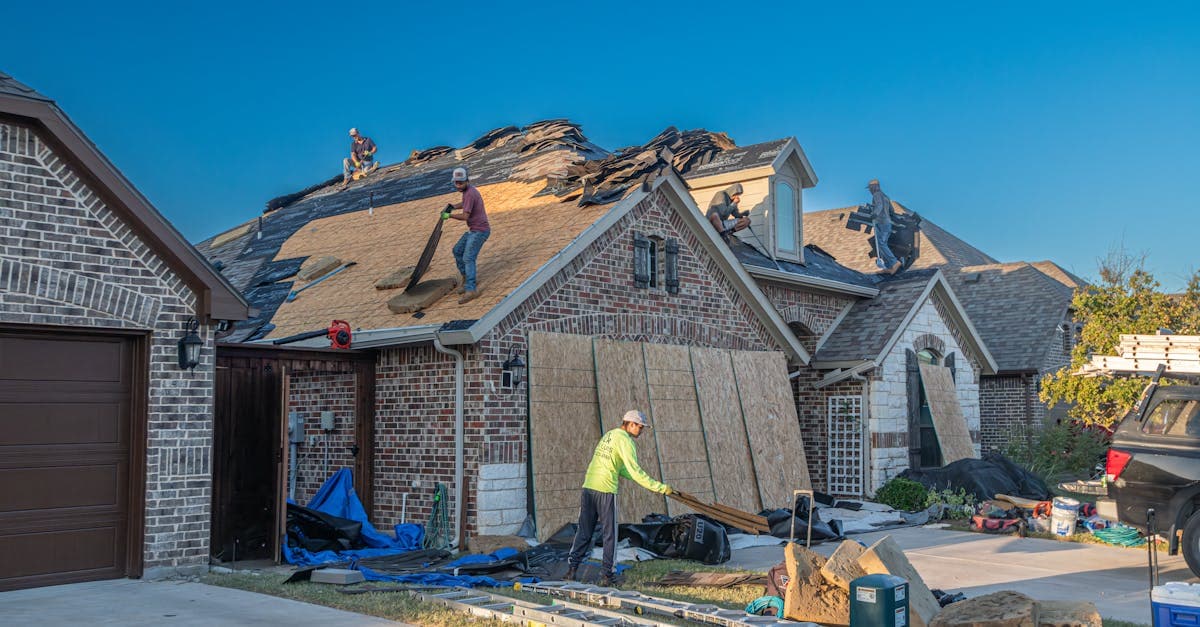
Here is the short version: replacement cost is what it would cost to replace or rebuild your damaged property with similar materials at today's prices, without subtracting for depreciation or wear. If your five-year-old TV is stolen, replacement cost pays for a new equivalent TV. Actual cash value would pay for a five-year-old TV — a fraction of the price.
Now here is why you need more than the short version. Replacement cost coverage has nuances that directly affect how much money you receive when you file a claim.
First, most replacement cost policies use a two-payment process. The insurer pays actual cash value upfront, then reimburses the depreciation after you complete repairs. If you do not replace the item or rebuild, you may receive only the ACV amount.
Second, your dwelling's replacement cost is not the same as its market value. Market value includes land. Replacement cost is the construction cost to rebuild the structure only. Getting this wrong leads to either underinsurance or overpaying for coverage.
Third, replacement cost changes over time. Construction costs have risen dramatically in recent years, and a coverage limit set three years ago may be 20 to 30 percent below current replacement cost.
This guide walks through everything: how replacement cost is calculated, how it works in claims, what endorsements strengthen your coverage, and how to ensure your limits keep pace with rising costs. Getting replacement cost right is the most impactful single thing you can do for your property insurance.
Ordinance or Law Coverage: When Standard Replacement Cost Falls Short
The evidence is clear. Standard replacement cost covers rebuilding to pre-loss condition. But when building codes have changed since your home was built, rebuilding to current code can cost significantly more. Ordinance or law coverage bridges this gap.
The three components: Ordinance or law coverage typically includes three types of protection. Coverage A pays for the loss of the undamaged portion of a building that must be demolished due to building code requirements. Coverage B pays for demolition costs. Coverage C pays for the increased cost of construction to meet current codes.
When it triggers: After a partial loss, local building departments may require that the undamaged portion of the home be brought up to current code — or demolished entirely if damage exceeds a threshold (often 50 percent of building value). Without ordinance coverage, you pay for these code-required changes yourself.
Cost impact examples: A home built in the 1970s suffers fire damage to 60 percent of the structure. The building department requires demolition of the remaining 40 percent and full reconstruction to current code. Additional costs include: demolition of undamaged portion ($15,000), electrical system upgrade ($12,000), plumbing code compliance ($8,000), structural engineering for current wind codes ($10,000), energy efficiency requirements ($5,000). Total additional cost: $50,000 — none of which is covered by standard replacement cost.
How much to carry: Ordinance or law coverage is typically offered as a percentage of your dwelling limit — 10, 25, or 50 percent. For older homes in jurisdictions with significantly updated building codes, 25 percent is a common recommendation. For very old homes, 50 percent may be appropriate.
Cost of the endorsement: Ordinance or law coverage is relatively inexpensive — typically $30 to $100 per year for 25 percent coverage on a standard homeowners policy. The protection it provides far exceeds the cost.
Replacement Cost and Your Mortgage
This brings us to a critical distinction. Your mortgage lender has a financial interest in your home's replacement cost coverage. Understanding their requirements and how they interact with your claim helps you navigate the relationship.
Lender requirements: Most mortgage agreements require you to maintain dwelling coverage at the full replacement cost of the home. This protects the lender's collateral — if your home is destroyed, the insurance proceeds pay off the mortgage or fund rebuilding.
The mortgagee clause: Your homeowners policy includes a mortgagee clause that names your lender as an additional payee. For large claims, the insurer issues the check jointly to you and the lender. The lender then releases funds in stages as rebuilding progresses.
Escrow and coverage limits: If your mortgage includes an escrow account for insurance, your lender may periodically review your coverage limit to ensure it meets replacement cost requirements. If the lender determines your coverage is insufficient, they may require an increase or purchase force-placed insurance at a significantly higher cost.
Claim payment complications: When the insurer issues a joint check, you cannot simply deposit it and begin repairs. You must typically endorse the check with the lender and submit it for processing. Many lenders hold the funds and release them in draws based on construction progress, similar to a construction loan.
If you choose not to rebuild: If you decide not to rebuild after a total loss, most lenders require that the insurance proceeds first pay off the mortgage balance. Any remaining amount goes to you. Under a replacement cost policy, if you do not rebuild, you receive only ACV — which may or may not cover the mortgage balance.
Communication: Notify your lender promptly after any loss that triggers a claim. Understand their draw schedule and documentation requirements before construction begins. Delays in lender fund releases can stall rebuilding and create cash flow problems.
How Insurers Calculate Replacement Cost
Consider the implications. Insurance companies use sophisticated tools and data sources to estimate your home's replacement cost. Understanding their methodology helps you evaluate whether their estimate is accurate.
Estimation tools: Most insurers use proprietary replacement cost estimators, with the two most common being Marshall and Swift/CoreLogic and Verisk's 360Value. These tools calculate cost based on inputs including square footage, construction type, number of stories, roof material, interior finishes, geographic location, and local labor rates.
Data inputs: The accuracy of the estimate depends on the accuracy of the inputs. Common errors include incorrect square footage, missing finished basements, unrecorded renovations, and outdated construction quality assessments. If your insurer's records show a standard kitchen when you actually have a custom renovation, the replacement cost estimate will be too low.
Local cost adjustments: Replacement cost varies dramatically by location. Building in rural areas costs less than urban areas. Coastal construction is more expensive due to code requirements. High-demand markets after natural disasters experience cost surges of 20 to 50 percent.
What the estimate includes: A comprehensive replacement cost estimate should include demolition and debris removal, foundation work, framing and structural elements, roofing, exterior finishes, interior finishes, electrical and plumbing, HVAC systems, insulation, flooring, cabinetry, fixtures, and contractor overhead and profit.
What is often missed: Custom features, high-end finishes, specialty construction (log homes, adobe, historic materials), accessory dwelling units, and recent renovations are frequently undervalued or omitted from automated estimates.
Your role: You can improve the accuracy of your replacement cost estimate by providing your insurer with detailed information about your home's features, square footage, finishes, and any improvements. Some insurers offer or require professional appraisals for high-value properties. Taking the time to verify inputs leads to more accurate coverage.
How Inflation Affects Replacement Cost
The evidence is clear. Inflation is the silent enemy of adequate replacement cost coverage. As construction materials, labor, and other costs increase, a coverage limit that was accurate when set becomes progressively inadequate.
Recent cost increases: Between 2020 and 2025, key construction inputs experienced dramatic price increases. Lumber prices, despite retreating from pandemic peaks, remain elevated. Concrete, roofing materials, electrical components, and HVAC equipment have all increased. Skilled labor costs have risen 20 to 30 percent in many markets due to worker shortages.
The compounding effect: Even at a moderate 5 percent annual increase, replacement costs rise 28 percent over five years and 63 percent over ten years. A $300,000 replacement cost estimate from 2016 would need to be $489,000 in 2026 to maintain the same purchasing power — an increase of $189,000.
Inflation guard endorsements: Many homeowners policies offer an inflation guard that automatically increases your dwelling coverage limit by a fixed percentage — typically 3 to 5 percent — at each renewal. This endorsement provides passive protection against gradual cost increases but may not keep pace with rapid inflation or regional cost spikes.
Limitations of inflation guard: The standard 3 to 4 percent annual increase may be insufficient during periods of high inflation. From 2020 to 2022, construction costs in many areas increased 15 to 20 percent per year — far outpacing any standard inflation guard.
Active management required: Inflation guard endorsements are a helpful baseline, but they are not a substitute for active management. Annual reviews of your replacement cost estimate, comparison against current construction cost data, and proactive limit adjustments are essential for maintaining adequate coverage.
What to do: Enable the inflation guard endorsement if your insurer offers it. Then, at every renewal, compare your coverage limit to current per-square-foot construction costs in your area. If the gap exceeds 10 percent, increase your limit immediately.
Documenting Your Property for Replacement Cost Claims
This brings us to a critical distinction. The quality of your documentation directly affects the speed and accuracy of your replacement cost claim. A thorough home inventory is your most valuable tool when filing a claim.
Why documentation matters: In a significant loss, you must prove what you owned, its condition before the loss, and what it costs to replace. Without documentation, you are relying on memory and the adjuster's generosity — neither of which produces optimal results.
The home inventory: Create a room-by-room inventory of everything you own, including descriptions, approximate age, purchase price (if known), and estimated replacement cost. Include serial numbers for electronics and appraisals for high-value items.
Visual documentation: Walk through your home with a camera or smartphone and photograph or video every room, including inside closets, cabinets, drawers, and storage areas. Capture labels, brand names, and model numbers. Update these images annually and after any major purchase.
Receipt retention: Keep receipts for major purchases — appliances, furniture, electronics, jewelry, and home improvements. Digital copies stored in the cloud survive any physical disaster.
Storage: Store your inventory, photos, and receipts in a location that would survive the same disaster that destroys your home. Cloud storage, a safe deposit box, or a family member's home are all appropriate options. A binder in your home office does not survive a fire.
Using your inventory in a claim: When filing a replacement cost claim, your inventory provides the adjuster with a comprehensive list of lost items, evidence of ownership and condition, and data to calculate replacement costs accurately. Claims with detailed inventories are processed faster and typically result in higher payouts.
How often to update: Review and update your home inventory annually and after major purchases, renovations, or life events. An outdated inventory is better than no inventory, but a current one is significantly more effective.
Replacement Cost and Matching Disputes
Consider the implications. One of the most common replacement cost disputes involves matching — when damage to part of a roof, siding, or flooring requires replacement, but the new materials do not match the undamaged portion. Who pays for a consistent appearance?
The matching problem: Your home has a 10-year-old roof with discontinued shingles. A storm damages 30 percent of the roof. The insurer agrees to pay replacement cost for the damaged section. But the new shingles do not match the existing ones in color or style. Do you have a mismatched roof, or does the insurer pay to replace the entire roof?
Insurer position: Many insurers argue they are only responsible for the damaged portion. They will pay to replace the damaged shingles with the closest available match, even if the result is a visible difference between old and new sections.
Policyholder position: Policyholders argue that a mismatched roof has not been restored to pre-loss condition. Replacement cost means similar kind and quality — and a patchwork roof is neither.
State-by-state variation: Some states have issued guidance or regulations on matching. Several state insurance departments have taken the position that replacement cost requires a reasonably uniform appearance. Others leave it to policy language and case law.
Policy language matters: Some policies specifically address matching, either requiring it or limiting it. Review your policy's replacement cost and loss settlement provisions for language about matching, uniformity, or cosmetic damage.
Practical strategies: Document the pre-loss appearance of your roof, siding, or flooring with photos before any damage occurs. If a matching dispute arises, obtain contractor estimates for both partial and full replacement. Request your insurer's specific policy on matching. If unresolved, the appraisal process or your state insurance department complaint process may provide resolution.
Prevention: When selecting materials for your home, consider whether future partial replacement will create matching issues. Common, standard materials in neutral colors are easier to match than custom or trendy options.
Replacement Cost and Betterment
The evidence is clear. Betterment occurs when repairs or replacement result in a property that is better than its pre-loss condition. Understanding how insurers handle betterment prevents disputes and unexpected costs.
What betterment means: If repairing or replacing a damaged component unavoidably improves the property beyond its pre-loss condition, the improvement is called betterment. Insurance is designed to restore you to your pre-loss condition — not to improve your position. Insurers may reduce payment for the betterment component.
Common betterment scenarios: A 15-year-old roof is damaged and the only available replacement shingles have a 30-year warranty, providing better performance than the original. The insurer pays replacement cost for the new roof but might argue that the upgraded warranty represents betterment. Plumbing repairs that replace old galvanized pipe with modern copper or PEX similarly represent a functional improvement.
How insurers handle betterment: Practices vary. Some insurers pay the full replacement cost when betterment is unavoidable — when the original materials are no longer available or no longer meet code. Others deduct a betterment charge representing the value of the improvement.
State regulations: Some states prohibit betterment deductions when the improvement is due to code requirements or material unavailability. Others allow betterment deductions in all circumstances. Check your state's insurance regulations and your policy language.
Minimizing betterment disputes: Document the pre-loss condition of your property with photos and records. When replacement materials represent an improvement, note whether the original materials are still available. If they are not, the betterment is unavoidable and should not reduce your payout.
Ordinance or law coverage: When betterment results from code-required upgrades, ordinance or law coverage — if you have it — pays the difference. This is another reason why this endorsement is valuable for older homes where any reconstruction triggers significant code upgrades.
Looking Ahead: The Future of Replacement Cost Coverage
Replacement cost coverage is evolving in response to changing construction markets, climate risks, and technology.
Construction costs are unlikely to return to pre-2020 levels. Material costs remain elevated, labor shortages persist, and building codes continue to tighten. These structural trends mean that replacement cost estimates must be more dynamic, updated more frequently, and monitored more actively.
Climate change is creating new replacement cost pressures. Homes in vulnerable areas may need climate-resilient materials and designs that cost more than traditional construction. Rebuilding after increasingly frequent severe weather events may face sustained demand surge.
Technology is improving replacement cost estimation. Drone surveys, satellite imagery, and AI-powered cost modeling are making estimates more accurate and enabling real-time updates. Some insurers now offer automated coverage limit adjustments based on current cost data.
For homeowners, the future demands greater engagement with replacement cost coverage. The days of setting a coverage limit and forgetting it are over. Annual reviews, proactive adjustments, and appropriate endorsements are the minimum standard for adequate protection in a rapidly changing cost environment.
Stay informed, stay proactive, and ensure your replacement cost coverage keeps pace with the world around you. Your financial security after a loss depends on the decisions you make today.
Continue reading

Online Insurance Quotes vs Agent Quotes: Which Should You Trust?
Online quote tools offer convenience but often use default assumptions that may not match your situation. Understanding the differences between digital quotes and agent-prepared quotes helps you shop smarter.

Policy Checkup Before and After Retirement: Adjusting for a New Phase
Retirement changes your income, assets, driving patterns, and insurance needs. A policy checkup at retirement realigns your coverage with your new lifestyle and financial priorities.

How AOB Abuse Drives Up Insurance Premiums for Everyone
Fraudulent and inflated AOB claims increase insurer payouts, which get passed along as higher premiums. Understanding AOB abuse helps you see why reform efforts have gained momentum.